
Manufacturers are planning a hike of over 15 per cent in the second quarter of calendar year 2026, as memory prices shoot through the roof.

Apple's ambitious strategy to expand iPhone exports, shift more production from China to India at a faster pace, and grow its domestic market hits a Trump-sized roadblock.
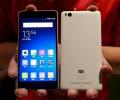
Chinese handset maker Xiaomi overtook Samsung to become the top player in the Indian smartphone market in the December quarter, ending the Korean company's 6-year dominance, reports by Canalys and Counterpoint Research said.

Trends like bundled offers and 4G-LTE feature phones could become mainstream in 2018

The company will, however, not bring its new 5G-enabled Pixel 5 and Pixel 4a (5G) to India and Singapore markets.

The Enforcement Directorate (ED) on Tuesday conducted searches at 44 places across the country in a money laundering investigation against Chinese smartphone manufacturing company Vivo and related firms, officials said. The searches are being carried out under sections of the Prevention of Money Laundering Act (PMLA) at locations in several states including in Delhi, Uttar Pradesh, Meghalaya, Maharashtra and others. The agency is conducting searches at 44 places related to Vivo and associated companies, they said.

These will be available at Apple authorised retailers from September 29

It has captured 38 per cent of the feature phone segment in 2018 through frequent innovation, says Arnab Dutta.

While the record shipments reflects the prevailing mood at the time, the exponential rise in Covid cases in the country has turned the tide since.

By the end of 2017, the Chinese firm had emerged as the fastest growing brand after posting 343 per cent growth with 19 per cent market share for the full year.

Revenue share from India has inched up to nearly 0.8 per cent of its global sales. The revenue growth rate is in stark contrast to the firm's performance in volume terms.

In October, OnePlus said, it recorded Rs 500 crore of revenue in only the first two days of the festive sale on Amazon.in. The firm is looking at going beyond the metro cities by scaling up its offline stores to over 5,000 and setting up more than 100 'experience centres' in the top 50 cities by next year.

Amid the protests against leading e-commerce firms, Flipkart and Amazon, shipments through the online route in fact witnessed a double-digit growth every quarter.

The number of new entrants is decreasing since 2015, as Indian market matures

With 8.5 per cent market share in the quarter ended September 2017, Nokia makes it to the top four bestselling feature phones in India.

Mods let Lenovo fight the features battle with premium players like Apple and Samsung and keep the price of the phone low, thereby drawing in aspirational customers who can't afford high-priced feature-rich handsets.

Rising prevalence of work-from-home and e-learning is driving sales of notebooks and tablets for most brands, but Apple's superior performance has more to do with its product quality.

To promote localisation of manufacturing and reduce its import bill, the government increased basic customs duty on mobile handsets - from 10 per cent to 15 per cent.

Chinese mobile brands are deeply entrenched in the Indian market. A move to bar them may send a bold diplomatic message. But its cost for the local industry is anybody's guess. In the event that Chinese brands face curbs, two handset makers - Samsung and Apple - squarely stand to gain.

A few days ago, Reliance Retail surprised the market by acquiring the Campa brand from Delhi-based Pure Drinks Ltd for Rs 22 crore. A successful cola brand in the eighties, especially in North India, Campa Cola thrived when Coke exited India in the late seventies. When the Atlanta-based major returned and PepsiCo set base in India, it went down fighting.

Samsung is lining up new products, increasing focus on e-commerce channels and tightening its grip over retail outlets.

Analysts tracking Apple said the India results were glimpses of what the company could achieve in emerging markets with a right pricing strategy for its products and local manufacturing.
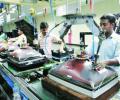
'The government expects demand for electronic products to reach $400 billion by 2023-24. This would be a huge foreign exchange outflow, which may further widen our trade deficit with other nations. Hence, the government plans to push local electronics manufacturing to cut down on their import bill.'

In spite of being attacked from all corners, a faltering supply chain and negative sentiments soaring high among the local consumers, top Chinese smartphone brands gained market share during the most critical phase - the April-June quarter of this year.

In 2015, as many as 15 major Chinese smartphone brands stepped into India.

The GST rate on mobile phones will be hiked to 18 per cent while that on maintenance repair overhaul (MRO) services for aircraft will be lowered to 5 per cent with effect from April 1, Finance Minister Nirmala Sitharaman said on Saturday. The GST rate on handmade and machine-made matchsticks has been rationalised to 12 per cent from 5 per cent and 18 per cent respectively.

Uber is suing Ola for $7.5 million to compensate for lost revenue and goodwill, alleging the Indian market leader created about 94,000 fake user accounts with the ride-hailing service and used them to make more than 405,000 false bookings

The once-popular brand plans to try its luck in the smartphone market with reliability as its key proposition.

While the 'Made in China' tag continues to be dominant as far as handsets in India go, things are beginning to change.

Price, specifications, features and all that you need to know about Apple's hot new 10th anniversary phone.

Ashish Pratap Singh wonders if Samsung will meet the same fate as Nokia?
 © 2026 Rediff.com - Advertise with us - Disclaimer - Privacy Policy - Sitemap - Feedback - About us - Terms of use - Grievances